ADA Portable Toilet Rental: Comprehending Exemptions and General Needs
Renting portable bathrooms seems straightforward till ease of access goes into the conversation, and it should. For event organizers, building supervisors, service providers, schools, churches, and households planning big events, the inquiry normally gets here late and with some stress and anxiety: do we need an ADA mobile toilet, and if so, how many?
That unpredictability is easy to understand. Mobile washrooms sit at the crossroads of momentary logistics and irreversible civil-rights responsibilities. People often tend to presume that since a configuration is short term, the regulations are lighter or more flexible. In technique, ease of access still matters, and the government standards do not disappear just because the toilets got here on a trailer rather than being built right into a wall.
The standard structure is clear. In the United States, the managing government accessibility requirement for mobile commode leasings is the 2010 ADA Specifications for Accessible Design, as translated by the Department of Justice and the Accessibility Board. For the majority of general usages, an obtainable device is not optional window clothing. It belongs to what makes a toilet arrangement functional by the public.
Where individuals get floundered remains in the details. They read about an exemption for building sites and assume it uses more generally than it does. They get a larger unit with a sticker on the door and assume that alone makes it compliant. Or they count the number of toilets on website but forget that the rule uses by collection, not simply by the grand total spread across a property.
This is where mindful planning helps. If you understand the narrow exception, the 5 percent rule, and the core physical demands for an accessible arrangement, you can make better decisions early and stay clear of the costly scramble that occurs when the units are currently delivered.
The concern behind the rental order
When a person asks for an ada mobile commode rental, they are frequently asking three various inquiries at once.
First, they need to know whether the law calls for an obtainable device whatsoever. Second, they need to know whether a details unit being provided by a vendor in fact certifies as an ada compliant portable bathroom. Third, they need to know whether positioning that device someplace on the website is enough, or whether the surrounding conditions likewise have to be accessible.
All 3 matter.
An ada accessible portable toilet is not just a bigger box with a broader door. Accessibility relies on the unit itself, the number of accessible devices are supplied within each cluster, how the device is determined, and whether an individual can reach it and utilize it. That last factor obtains forgotten more than it should. A compliant-looking unit established beyond uneven ground, obstructed by barriers, or reached just by a noncompliant ramp can still develop severe gain access to problems.
What the federal basic really controls
The regulating standard is the 2010 ADA Requirements for Accessible Style. That is the federal referral point for availability, and it relates to portable bathroom leasings with the analyses made use of by the Division of Justice and the Gain Access To Board.
That issues because a great deal of conversations in the field still wander toward behavior or supplier shorthand. Someone may claim, "We always go down one handicap unit if the consumer asks," or, "It's momentary, so the routine policies do not truly apply." Those are not secure assumptions. The managing standard is not what a vendor generally does. It is the ADA requirement and its applicable technological and scoping requirements.
For portable toilet arrangements made use of by the public, the accessible-unit requirement remains crucial even at momentary events. Short-term does not imply excluded. An event that lasts one weekend break, a church charity event, an institution field day, and a seasonal area occasion can all raise the exact same availability issues.
The 5 percent guideline, and why the word "cluster" matters
One of the clearest guidelines in this location is the scoping demand for portable single-user commode devices. A minimum of 5 percent of the units in each collection should be accessible. The Access Board has explained that this uses even at momentary events.
That expression, "in each cluster," is entitled to focus. People frequently amount to all washrooms throughout a website and afterwards presume they are covered if one accessible unit shows up someplace in the matter. Yet the policy focuses on the collections of units, not simply the overall occasion inventory.
Imagine a big exterior event with portable bathrooms positioned in numerous separate areas throughout the premises. If those areas operate as unique clusters, availability needs to be considered at each cluster, not just at the website overall. A person ought to not be expected to travel across the location to locate the only available choice while every person else has a nearby typical unit.
This is among one of the most typical planning mistakes because it often tends to show up late. Theoretically, the overall system matter looks penalty. On the ground, the accessible toilet is parked in the wrong place.
For clients inquiring about ada certified portable toilets, this is frequently the initial point that scuffs. It is not just a matter of whether you have one easily accessible unit. It is a matter of exactly how your washroom format is organized.
The slim construction-site exemption
Now for the piece that creates the most confusion.
There is a recognized distinction involving mobile toilet units at building and construction sites made use of specifically by construction personnel. Those units are excluded from the portable-toilet availability scoping requirement in the pointed out 1991 standard. That is a particular carve-out, and it is not a covering exemption for anything happening near building or on rough ground.
The key word is exclusively. If the mobile bathrooms are for building workers only, that exception belongs to the lawful conversation. Once individuals extend that reasoning past its actual borders, difficulty starts.
A mixed-use website changes the picture. A task with visitors, members of the general public, or other non-construction customers raises a different collection of considerations. Also, a basic mobile restroom service for an event, public celebration, or customer-facing setting does not fall under that narrow construction-personnel exception.
This is why it helps to reduce and ask a plain-language concern prior to renting out. That will be utilizing these devices? If the answer consists of the general public, guests, guests, customers, , trainees, or households, you are no longer in the risk-free territory of a construction-only assumption.
People sometimes latch onto the phrase "building and construction website" as though it addresses whatever. In practice, the better lens is usage, not ambience. Mud, fencing, equipment, and temporary problems do not immediately develop an exception. Exclusive use by construction workers is what issues in the exception defined here.
What makes an obtainable mobile toilet more than a label
A system can not end up being certified by marketing language alone. Terms like ada handicap easily accessible mobile bathroom, ada certified easily accessible mobile bathrooms, or ada-compliant mobile bathrooms audio assuring, but the actual requirements are practical and physical.
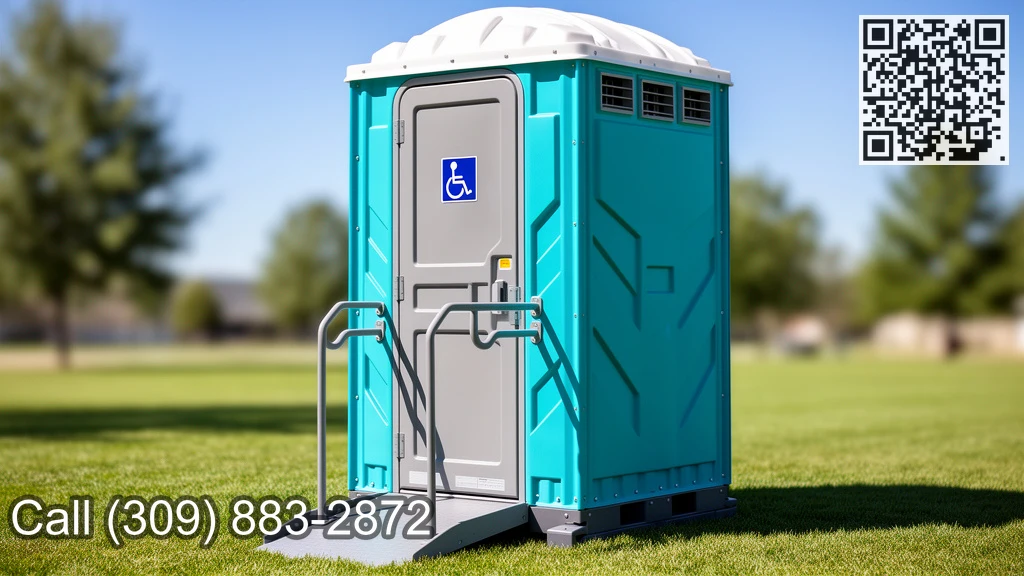
Accessible mobile bathroom systems have to be understood the International Icon of Accessibility. That is a noticeable and vital part of compliance since individuals need to be able to situate the easily accessible choice without uncertainty. Still, signage is only one piece.
The devices should likewise have an obtainable course and entryway. If ramps or touchdowns are needed, those functions need to follow the ADA technical requirements. This factor tends to shock individuals since they concentrate on the bathroom box itself and fail to remember that the course to it matters just as much.
Anyone that has worked around momentary websites has actually seen just how easily gain access to can be undermined by positioning. A supplier may supply an ada portable bathroom that is completely proper in theory, just for it to be set on an uneven location, crowded by barricades, or isolated behind a grade adjustment that makes access tough or impossible. The requirements do not quit at the door.
Inside the device, the toilet space technical needs also come into play. That includes component clearances, turning area, and door handling clearances, along with the relevant grab-bar and water-closet clearance guidelines. Those are technological demands, and they exist because usability depends upon more than a broader impact. An individual using a wheelchair or other wheelchair help needs adequate area to method, get in, shut the door, turn, placement, and transfer as intended.
This is why a true ada compliant mobile bathroom is not interchangeable with a merely roomy mobile unit. More space is practical, however the plan and clearances are what identify whether the area functions accessibly.
Temporary events still bring real obligations
Short-term events are where misunderstandings increase. Organizers are managing licenses, car park, climate, volunteers, distributions, and group flow. Toilet rentals become another line item, and availability can get decreased to a simple amount question.
But momentary events are especially part of the conversation right here. The Access Board has said the 5 percent accessible-unit demand uses also at momentary events. That suggests a one-day fundraiser or weekend fair must not be dealt with as if access is optional since the arrangement is fleeting.
In reality, this frequently ends up being a placement concern more than a procurement problem. Coordinators might rent out the right number of ada certified portable washrooms yet place them in a manner that isolates them from the occasion's practical center. An easily accessible path that exists just on a website map, not on the ground, is a problem.
The thoughtful approach is to intend the washroom location the method you would intend available car parking or an entryway. Where are individuals arriving? Where are the major courses of travel? What surface adjustments or pinch points will matter once the crowd completes? Those inquiries are illegal trivia. They shape whether a visitor can make use of the occasion with dignity.
Why "one accessible device" is not always enough
There is a solid lure to think in minimums. If a client listens to "5 percent," the mind immediately transforms toward the smallest feasible number that could please the policy. That is easy to understand, particularly when budgets are tight.
Still, minimal conformity and workable gain access to are not always the exact same point in practice.
https://blogfreely.net/tronenabum/ada-available-portable-bathroom-rental-and-needed-access-functionsIf units are split into multiple clusters, the mathematics may call for easily accessible devices in more than one location. If web traffic is hefty, a single easily accessible device might produce lengthy waits that disproportionately impact individuals who require it. If a site is big, one appropriately identified ada mobile commode placed far from the main flow might meet neither the spirit nor the sensible feature of accessibility.
This is where judgment issues. The legislation provides the framework, however great planning asks a 2nd concern: will certainly someone reasonably have the ability to discover and use this restroom with the same basic comfort supplied to others?
That is usually the distinction between a checkbox strategy and a respectful one.
The route to the system can make or damage compliance
Among all the ada portable commode demands, the available route is among the most convenient to underestimate.
People photo compliance as a building of the unit. They neglect that accessibility begins long before the door swing. If the path is blocked, unpredictable, high, or separated by features that require a noncompliant ramp or landing, the configuration can stop working individuals even if the mobile toilet itself was manufactured to the ideal technological layout.
The requirements need an available path and entry, and when ramps or landings are needed, those functions need to abide by ADA technical demands. That puts responsibility on the broader configuration, not just the vendor's equipment inventory.
For organizers, this suggests the shipment place is not an afterthought. It belongs to compliance. A solid, fairly accessible technique issues. So does avoiding final area improvisation, like establishing the obtainable system any place there is area after the typical units are already in place.
The most preventable mistakes occur when availability is taken care of at the end of the layout process instead of the beginning.
What tenants must ask before delivery day
If you are renting out for a public or guest-facing setup, it assists to ask straight questions early. You do not need a lawful workshop. You need quality concerning the unit, the count, and the site plan.
Here are the useful concerns that generally matter most:
- Is the device being supplied intended to operate as an ada compliant portable bathroom, not simply a larger basic model?
- How several washroom collections will certainly exist on the site, and does each cluster have the required available coverage?
- Will the unit be understood the International Sign of Accessibility?
- Is the organized course and entry obtainable, including any ramp or landing that might be needed?
- Has the last placement been assessed with the real website problems in mind, not simply the order sheet?
Those 5 questions tend to subject most preventable problems before the truck arrives.
Common misconceptions that result in poor setups
Over the years, the very same mistaken presumptions tend to emerge repeatedly. They are worth calling clearly because they seem affordable until you compare them to the real requirements.
The first misconception is that temporary ways excluded. It does not. The 5 percent regulation still applies at short-lived events.
The second is that accessible unit somewhere on the building addresses the concern. It may not, particularly when restrooms are set up in separate clusters.
The 3rd is that the construction-site exemption applies whenever a setup really feels rugged or work-related. It does not. The exception explained right here is linked to mobile systems used specifically by construction personnel.
The fourth is that signage alone proves compliance. Identification with the access icon is needed, but it is just one part of the general picture.
The fifth is that the unit can be compliant even if the course to it is not. The standards call for an easily accessible course and entrance, which surrounding context matters.
When customers recognize these points early, the rental discussion comes to be a lot easier and a lot more productive.
A more comprehensive compliance climate is shaping expectations
Accessibility enforcement does not exist in a vacuum, and it is useful to acknowledge that. A relevant 2026 advancement highlights the wider direction of ADA compliance activity: the Department of Justice prolonged the deadline for state and city government internet and mobile availability rules to April 26, 2027 for bigger entities.
That upgrade is not concerning mobile toilets specifically, but it signifies something crucial. Ease of access is being imposed and talked about throughout more components of business life, not less. Physical gain access to, electronic accessibility, public-service access, and temporary-access concerns increasingly sit within the same more comprehensive compliance culture.
For any person responsible for facilities, occasions, or public accommodations, that broader environment needs to urge a much more major technique to information like ada compliant portable washrooms. Not since portable restroom services are glamorous or high account, but since they belong to whether individuals can participate totally and with dignity.
The human side of a technical requirement
It is very easy to allow a topic such as this become abstract. Percents, path demands, technical clearances, icons, scoping exceptions. All of that is required, but none of it is the genuine reason availability matters.
The actual reason is that a bathroom is not optional infrastructure. When available washroom gain access to is missing, individuals see quick, and they pay the cost personally. They leave early. They rely upon aid they should not require. They are forced to prepare around an obstacle that others hardly register.
That is why the difference in between an ada mobile washroom and a standard unit can not be treated as cosmetic. It affects whether somebody can remain at an event, do their work, go to a service, support a child, or join public life without preventable embarrassment or hardship.
The regulation gives us the framework. Excellent operators, careful planners, and diligent tenants consider that structure functional effect.
Getting it right without overcomplicating it
For most non-exempt portable toilet services, the path is relatively simple once the confusion is removed. Make use of the 2010 ADA Requirements for Accessible Style as the regulating federal standard. Remember that for clusters of mobile single-user devices, a minimum of 5 percent in each cluster need to be accessible, consisting of at short-term occasions. See to it the available system is identified with the International Symbol of Access. Confirm that there is an accessible path and entry, with any kind of required ramps or landings fulfilling the suitable technical needs. And do not forget that the system itself have to satisfy the technological toilet-room demands that control clearances, maneuvering space, and related features.
Treat the construction-personnel exception very carefully and narrowly. It is not a faster way for general public rentals.
If you come close to ada mobile bathroom service with that way of thinking, the procedure comes to be much less dirty. Much more notably, the outcome is a lot more functional for individuals who depend on it. That is the common worth aiming for, whether you are purchasing one ada-compliant mobile bathroom or collaborating numerous banks of ada certified portable commodes throughout a big short-term site.
 Ask ChatGPT
 Ask Grok
 Ask Perplexity
 Ask Claude
 Ask Google AI
 Ask You