ADA-Compliant Portable Commode Fundamentals for Event and Website Services
Anyone reservation washrooms for a public occasion or an energetic website is generally handling a lot at the same time: presence quotes, delivery windows, irregular ground, weather, web traffic flow, cleanup plans, and expense. Availability can obtain pressed into the classification of "we'll handle that with the toilet order." That is exactly where blunders happen.
An ADA certified mobile toilet is not simply a larger unit went down somewhere near the basic row. The government availability structure is much more details than that. For mobile toilet rentals in the United States, the governing recommendation factor is the 2010 ADA Requirements for Accessible Style, along with how those requirements are translated by the U.S. Access Board and the Division of Justice. That issues due to the fact that the device itself is just part of the photo. Positioning, course, entrance gain access to, interior clearances, and identification all count.
If you are setting up portable commodes for an event, wedding celebration, public event, school feature, fairground occasion, area race, or a comparable arrangement, it helps to consider ease of access as part of the site plan instead of an add-on. People do not experience compliance theoretically. They experience it in the area, on gravel, in mud, after dark, in a mobility device, with a walker, or while assisting a member of the family with a crowded path.
The fundamental policy people miss out on first
For clusters of mobile single-user toilet devices, a minimum of 5 percent of the systems in each cluster need to come. The Accessibility Board's advice makes clear that this applies also at momentary events. That point catches numerous planners unsuspecting due to the fact that temporary configurations are usually dealt with casually, as though much shorter period means looser guidelines. It does not work that way.
The phrase "in each cluster" is where the real preparation begins. If you have numerous financial institutions of units spread across a residential property, you can not treat the whole event total as one big pool and place the available systems wherever it is simplest for distribution. Accessibility has to be resolved where the systems are in fact grouped. In sensible terms, that suggests a site with toilet banks at the entrance, near food service, and by the efficiency location requires to think of each of those groups carefully.
That is usually the distinction between paper compliance and usable access. I have actually seen designs where a coordinator really felt covered due to the fact that one ada easily accessible portable washroom was somewhere on site, yet the individual that required it had to go across a field or navigate a crowded path to reach it. Even without entering into extra regulations that are not in the confirmed criteria below, common sense and excellent planning tell you that placement matters a terrific deal.
"Easily accessible" indicates more than bigger
A lot of people use phrases like ada mobile bathroom or ada handicap available mobile restroom to indicate "the big one." That shorthand is reasonable, but it oversimplifies what the criteria expect.
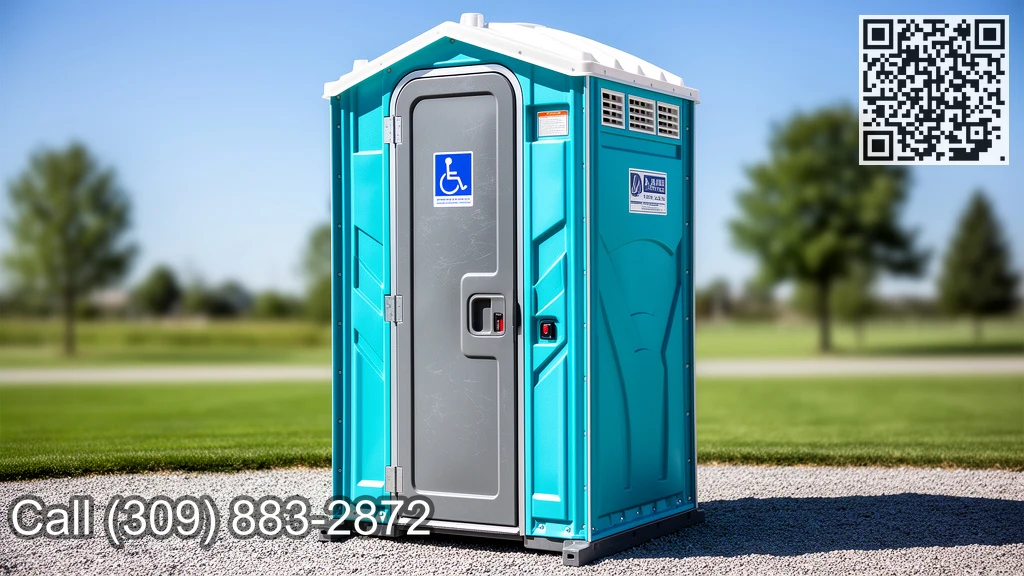
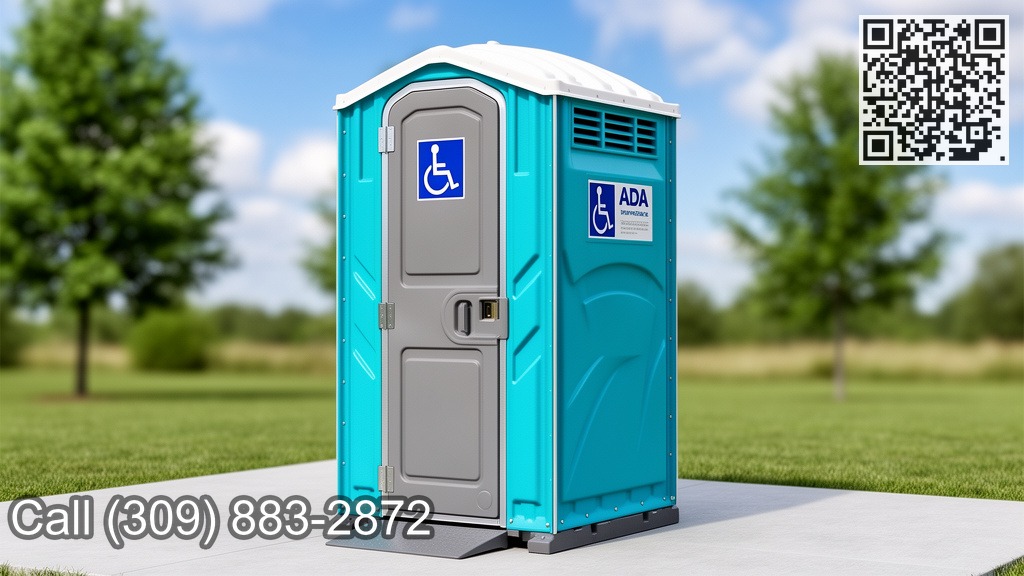
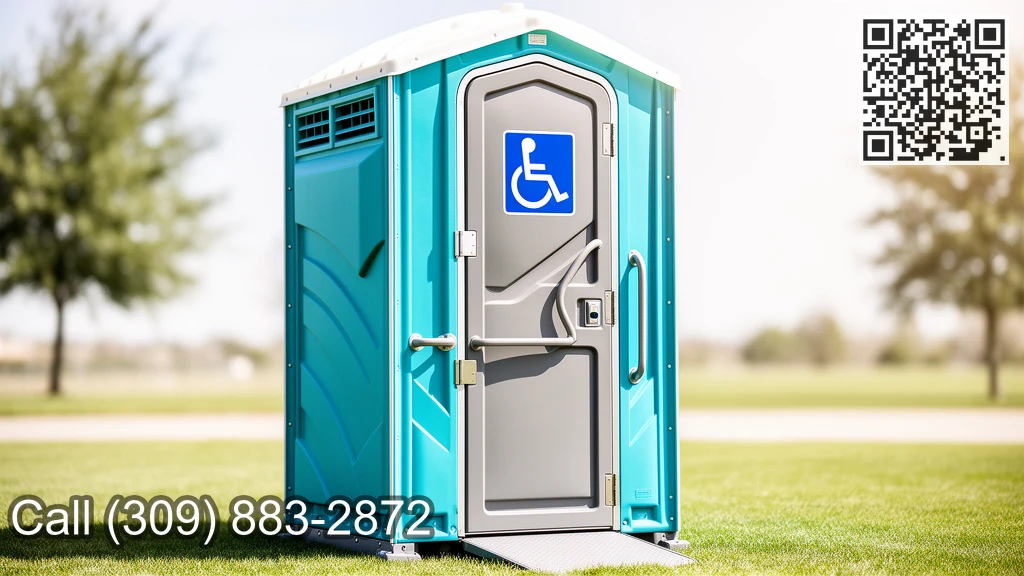
An easily accessible mobile unit have to be related to the International Sign of Ease Of Access. That noticeable noting matters for wayfinding. It tells individuals which unit is planned to give the necessary accessibility. At active events, particularly after dark or throughout optimal lines, clear recognition can conserve a person from having to ask team for help or wait in the wrong queue.
More significantly, available units have to have an accessible route and entrance. If ramps or landings are required, those attributes have to comply with the ADA technical requirements. This is one of the most usual field problems. A compliant unit can end up being functionally unusable if it is established beyond soft ground, up an abrupt edge, or in a place where the entrance location does not offer the needed access.
Inside the unit, the requirements likewise reach right into the toilet-room technical demands. The confirmed guidance includes turning area, door maneuvering clearances, fixture clearances, and relevant grab-bar and water-closet clearance guidelines. That suggests access is not a label or a marketing group. It is a mix of technical conditions that function together.
When people search for ada certified obtainable mobile restrooms, what they normally want is certainty. They need to know that the unit is not simply promoted as accessible, but actually set up in such a way that straightens with the requirements that control its use.
Why website placement adjustments everything
Portable bathroom preparation has a tendency to concentrate initially on vehicle gain access to and servicing, which is understandable. Units need to get here, be positioned securely, and be pumped when required. Yet gain access to for shipment is not the same as gain access to for users.
The route to an ada mobile commode has to be considered from the viewpoint of a person approaching it individually. An unit placed at the edge of a rough service lane could be hassle-free for a truck and discouraging for a guest. A device placed behind barricades may look neat on a map and become awkward in real use. Even when the bathroom itself is the ideal design, the surrounding problems can weaken accessibility.
This is where seasoned event supervisors and website supervisors have a tendency to do much better. They stroll the path. They do not simply point to a location on a strategy. They ask easy inquiries. Can somebody reach this entry without detouring around cables, fence, short-lived staging, or supplier spillover? Does the course stay functional once groups form? If climate transforms poor, does this location become soft or rutted?
Those are not abstract concerns. Short-term sites change by the hour. What looked penalty throughout setup at 8 a.m. Can end up being a traffic jam by midday and a mess by night. An understanding approach to ada portable bathroom rental methods anticipating just how the site acts when it is completely occupied, not simply when it is empty.
Event leasings and site rentals are not always treated the same
There is an important subtlety in the requirements history. The ADA criteria differentiate portable bathroom devices at building and construction websites used specifically by construction personnel. The confirmed context keeps in mind an exemption from the portable-toilet availability scoping requirement in the cited 1991 requirement for that slim circumstance. For general mobile commode leasings, the accessible-unit requirement remains.
That difference issues because people often speak freely regarding "site rentals" as though every site falls under the very same category. They do not. A public-facing event, a general rental circumstance, and a construction arrangement utilized only by building and construction workers might be discriminated under the particular scoping point noted in the confirmed materials.
This is a great location for care. The exception language individuals listen to secondhand can travel further than it should. I have seen teams presume that due to the fact that a jobsite is active, they can disregard access concerns totally. The confirmed information below does not sustain that broad jump. It speaks with a particular construction-site context used specifically by building personnel under the pointed out 1991 scoping arrangement, while declaring that general portable washroom rentals still carry the accessible-unit requirement.
When doubtful, that is the moment to slow down and verify the specific usage case rather than relying upon an expression a person spoken with another team, venue, or rental workdesk years ago.
The technical side occupants should ask about
Most customers are not anticipated to memorize every ADA technical arrangement. Still, there is a useful difference in between getting thoughtlessly and asking enlightened concerns. If you are accountable for a toilet order, you must be paying attention for indicators that the vendor understands more than inventory labels.
A genuine conversation of ada compliant portable restrooms ought to touch the device, the approach, and the positioning conditions. If a vendor only discusses "the larger model" and nothing else, that is typically a sign that you require an even more comprehensive conversation.
Here are the concerns that actually assist:
- How will certainly the accessible unit be identified on site?
- What does the vendor demand from you to maintain an easily accessible course and entrance?
- If a ramp or landing is required, how is that being handled under ADA technological requirements?
- Has the placement area been evaluated for maneuvering at the door and around the entrance?
- If there will certainly be numerous clusters, just how is the accessible-unit count being taken care of in each one?
That brief checklist works since it maintains the conversation rooted in the requirements we know apply. It additionally changes the emphasis from "Do you have an ADA unit?" to "How will this be certified once it is mounted?"
Counting systems without guessing
The 5 percent rule seems simple till an event grows in stages. A coordinator might start with one cluster, add an additional near auto parking, then tack on a smaller sized bank by an overflow location. Already, toilet orders are often being adjusted quickly, and access can get counted loosely.
The safer attitude is to treat each restroom cluster as its very own ease of access checkpoint. If there is a collection of single-user portable bathrooms, ask whether a minimum of 5 percent of that collection come. This is particularly important at larger events where attendees might stagnate freely from one location to one more, or where fars away, fencing, or group thickness properly isolate one financial institution from another.
There is likewise a human reason to get this right. The individual that requires the ada compliant mobile toilet should not have to leave their prompt location and travel further than everybody else just due to the fact that easily accessible planning was centralized for convenience.
That useful point typically resonates greater than lawful language. Access is not a special perk. It is the fundamental expectation that a washroom will certainly be readily available where people are currently being guided to go.
Common setup failings that start with excellent intentions
Very couple of access issues start with poor objectives. Most start with hurried decisions, presumptions, or a website that transformed after the first strategy was drawn. The staff wishes to keep the row directly. The coordinator wishes to conceal toilets behind a fencing line. The location desires them away from the very best image angle. Everyone involved has a factor. Then the accessible system ends up in the least useful location.
The patterns are familiar. The obtainable unit is gotten correctly yet placed on a route that comes to be blocked during event build-out. The sign is present, yet the entrance area is cramped by close-by tools. A required ramp or touchdown is treated as optional because the grade looked manageable from a range. A cluster matter is done across the site total rather than at the real place of each bank.
None of that requires negative intent. It just calls for enough moving parts and insufficient final review.
One routine that helps is doing a last walkthrough after every little thing else is in place, not in the past. Short-lived occasions specifically are notorious for altering form throughout arrangement. A course that was clear at shipment can be narrowed by barriers, generators, outdoors tents, hosting, or vendor supply by the time gates open. Ease of access must be examined after those shifts occur, since that is the condition the general public will actually experience.
The language around "ADA" can be slippery
In the rental market, phrases like ada compliant portable washrooms, ada-compliant portable washrooms, ada compliant portable toilets, and ada-compliant mobile commode typically get used in sales products and search terms. Clients make use of those phrases due to the fact that they need quick peace of mind. Vendors utilize them due to the fact that they match what people kind right into search bars.
Still, those labels are just practical if they lead to the actual demands. An item summary on its own does not assure the full setup is certified. That is why it deserves being precise in discussion. Ask whether the unit is planned to satisfy the appropriate toilet-room technical demands. Ask just how the entry gain access to will be handled. Ask how it will certainly be determined. Ask exactly how the path will certainly stay easily accessible after the website is completely built.
That degree of uniqueness safeguards everybody. It aids the tenant avoid shocks, and it aids the distributor avoid being evaluated exclusively on a generic label that states as well little.
Temporary does not suggest informal
There is a more comprehensive compliance fact worth noticing. Access enforcement does not stall even if an arrangement is temporary, outdoors, or logistically tough. The recent extension of a Division of Justice target date on internet and mobile ease of access policies for state and city governments is not concerning portable commodes straight, yet it does show a larger reality: ADA conformity continues to be active throughout fields. Short-lived operators, event supervisors, locations, public companies, and professionals are all operating in an environment where ease of access assumptions are very much alive.
That more comprehensive background matters due to the fact that it changes the tone of preparation. Accessibility is no more something groups can deal with as a box for someone else to check late at the same time. It belongs in the preliminary of website decisions, along with energies, crowd flow, and safety.
When a community, institution, not-for-profit, or location group is renting out an ada mobile washroom for a public feature, the best strategy is positive instead of defensive. You are not simply trying to avoid a grievance. You are attempting to produce a website people can make use of with dignity and without unneeded friction.
What good coordination resembles on the ground
The best restroom arrangements typically come from very early sychronisation between the renter and the company. Shortly conferences, simply clear decisions made before trucks roll. The renter describes where the collections will certainly be. The supplier clarifies what conditions the obtainable systems require. Someone checks whether the selected places can sustain an obtainable path and entry. Then a last evaluation occurs once all temporary facilities is in place.
That procedure sounds ordinary since it is. Availability work is typically much less concerning heroic fixes and more about regimented coordination.
A little exterior concert is a good example. If the organizer understands there will certainly be one washroom bank near the entryway and an additional near giving ins, the 5 percent need must be thought about separately for those collections from the beginning. If the obtainable system at the giving ins area would have to sit beyond a tight https://pristineportablesil.com/service-area/ fenced corner, that problem needs to be resolved before delivery, not after visitors arrive. If the path near the entryway is most likely to loaded with lines, the easily accessible course must be shielded in the design as opposed to improvisated with apologies later.
The very same reasoning puts on fairs, races, and pop-up public occasions. Any time you listen to a person claim, "We'll figure out where the ADA unit goes once the rest is established," you are checking out a strategy that may become costly, awkward, or noncompliant in a hurry.
Renting with treatment as opposed to assumptions
If you are the client, it helps to frame the order with sensible detail instead of a solitary ask for "one ADA device." Inform the company the amount of restroom clusters you expect. Explain whether the event is public-facing. State any kind of grade changes, constrained courses, or locations that have a tendency to get soft. If the website will evolve throughout arrangement, state that early.
If you are the service provider, plain language goes a lengthy way. Explain that an ada certified obtainable portable restroom is not just about the device version. Describe that path, entrance, and recognition issue too. That type of conversation usually stops problem later on because it establishes realistic expectations before placement day.
One useful mental shift is to stop considering the obtainable system as a special restroom and start thinking about it as component of the general user experience. For the individual relying upon it, this is not a side issue. It is the toilet plan.
A final sensible standard
The most convenient method to pressure-test your plan is to visualize one visitor or worker showing up on website and needing that toilet without help. Can they find the marked unit? Can they get to it by an easily accessible path? Can they enter it properly? Has the cluster been counted appropriately? If ramps or touchdowns are needed, have those been dealt with to the required requirement? Does the arrangement still work after the website fills up up?
Those inquiries maintain the emphasis where it belongs. Not on marketing terms, out assumptions, and not on the idea that short-term centers should have short-term thinking. The standards for an ada mobile commode are real, therefore is the difference they make when a site is prepared with care.
When individuals search for ada compliant mobile bathroom requirements, what they typically need is not legal movie theater. They need a toilet configuration that respects the regulation, fits the site, and works for individuals that depend on it. That is the fundamental task. Everything else is detail.
 Ask ChatGPT
 Ask Grok
 Ask Perplexity
 Ask Claude
 Ask Google AI
 Ask You